🦇 Subterranean Geomorphology: The World Beneath Our Feet
Karst landscapes and subterranean cave systems represent one of Earth’s most intricate geological phenomena. Encompassing over 20 percent of the planet’s ice-free continental landmass and supplying potable drinking water to nearly a quarter of humanity, karst systems are sculpted not by mechanical river abrasion, but by aqueous chemical dissolution of soluble bedrock—primarily limestone, dolomite, and gypsum—along subterranean fracture networks.
1. The Geochemistry of Carbonate Dissolution: Carbonic Acid and the Calcite Equilibrium
Pure liquid water (H₂O) is a remarkably poor solvent for calcium carbonate (calcite, CaCO₃), possessing an equilibrium solubility product (K_sp) of merely ~3.3 × 10⁻⁹ at 25°C. To dissolve limestone on a regional landscape scale, meteoric groundwater must be chemically energized into an acidic leaching solution. This transformation is driven by dissolved carbon dioxide:
As rainwater falls through the atmosphere, it absorbs trace atmospheric carbon dioxide (~420 ppm). However, the primary site of geochemical charging occurs when meteoric water infiltrates through organic-rich surface soil horizons. Biological root respiration, fungal metabolism, and bacterial decay of organic humic matter generate soil-gas carbon dioxide concentrations of 1% to 10% (10,000 to 100,000 ppm)—up to 200 times higher than atmospheric levels.
Dissolved CO₂ reacts with water to form weak carbonic acid (H₂CO₃), which dissociates into hydrogen ions (H⁺) and bicarbonate ions (HCO₃⁻):
CO₂ + H₂O ⇌ H₂CO₃ ⇌ H⁺ + HCO₃⁻
When this acidified groundwater percolates downward along microscopic joints, bedding planes, and faults in the limestone bedrock, the free hydrogen ions attack the solid calcite crystal lattice:
CaCO₃ + H⁺ + HCO₃⁻ ⇌ Ca²⁺ + 2 HCO₃⁻
This reversible equilibrium reaction is governed by temperature, hydrostatic pressure, and pH. Crucially, calcite exhibits retrograde solubility: unlike most salts, calcite dissolves more readily in cold water than in warm water. Cold glacial meltwaters and temperate rainwaters are exceptionally corrosive to limestone.
2. Mischungskorrosion: The Non-Linear Chemistry of Speleogenesis
For decades, a major paradox confronted karst hydrogeologists: lab experiments showed that acidic groundwater dissolving limestone becomes fully saturated with calcium within days to weeks, penetrating only a few meters along a tight fracture before losing all corrosive dissolving power. How, then, could water travel tens of kilometers deep into dense limestone bedrock to dissolve gigantic cave chambers like Mammoth Cave (over 685 kilometers of surveyed passages) or Carlsbad Cavern?
In 1953, German geochemist Alfred Bögli resolved this dilemma through his discovery of Mischungskorrosion (Mixing Corrosion). Bögli demonstrated that the equilibrium saturation curve of calcite as a function of dissolved CO₂ is mathematically non-linear (concave downward).
When two distinct bodies of groundwater—both of which are 100% fully saturated with calcite, but which have equilibrated with different partial pressures of CO₂ (such as a shallow soil water mixing with a deep fracture water)—converge and mix within a subterranean fracture, the resulting hybrid water mixture does not lie on the equilibrium curve. Instead, it falls into the undersaturated field. The mixed water instantly regains aggressive chemical corrosiveness, capable of dissolving substantial additional calcite deep beneath the surface! Mixing corrosion provides the primary chemical engine for the initiation of subterranean speleogenesis at deep hydraulic junctions.
| Speleogenetic Zone | Hydrological Regime | Passage Morphology | Flow Dynamics | Diagnostic Geological Features |
|---|---|---|---|---|
| Epikarst (Subcutaneous Zone) | Perched unsaturated vadose weathering | Enlarged vertical fissures (cutters, grikes) | Diffusive downward percolation | Porous storage reservoir feeding cave drips |
| Vadose Free-Surface Zone | Unsaturated zone above water table | Canyons, vertical shafts, meanders, potholes | Gravitational open-channel flow | Entrenched meandering canyons, flutes |
| Water Table Transition Zone | Fluctuating piezometric surface | Broad horizontal elliptical tubes | Rapid lateral drainage pulses | Long continuous river caves, master conduits |
| Deep Phreatic Zone | Fully saturated beneath the water table | Circular pressure conduits, loops, cupolas | Pressurized pipe flow (Darcy-Weisbach) | Siphons, paragenetic ceiling channels, pendants |
| Hypogene / Hydrothermal | Deep ascending thermal or acidic fluids | Maze caves, spherical bubbles, bell holes | Thermal buoyancy, sulfuric acid dissolution | Carlsbad Cavern, Lechuguilla (gypsum crusts) |
3. Speleogenetic Evolution: From Micro-Fracture to Massive Conduits
The birth and growth of a cave system—termed speleogenesis—progresses through three distinct hydrological and mechanical phases across hundreds of thousands of years:
- 1. The Inception and Gestation Phase: Pristine limestone massifs possess initial fracture apertures measuring a mere 10 to 100 micrometers. Under laminar flow conditions, fluid velocities are exceptionally sluggish (centimeters per year). Water dissolving calcite rapidly approaches saturation, widening fractures at a glacial pace of ~0.001 mm/year. This gestation phase persists for 10,000 to 100,000 years without producing noticeable voids.
- 2. The Kinetic Breakthrough Threshold: As fracture apertures slowly reach a critical threshold of approximately 5 to 10 millimeters, fluid flow transitions abruptly from laminar flow to turbulent flow. Hydraulic resistance drops, water discharge increases exponentially, and undersaturated water sweeps completely through the fracture from sinkhole to spring. This event is the speleogenetic breakthrough.
- 3. Rapid Conduit Enlargement: Following breakthrough, conduit enlargement accelerates by orders of magnitude (0.1 to 1.0 mm/year). Within a few tens of thousands of years, the fracture expands into a human-sized tunnel and ultimately into cavernous trunk passages tens of meters in diameter.
💧 Epikarst Storage Mechanics
The uppermost 3 to 10 meters of weathered limestone beneath the soil is the epikarst. With porosity exceeding 20%, the epikarst acts as a subterranean sponge, buffering extreme storm runoff and slowly metering water downward into deep cave systems via thousands of continuous stalactite drip sites.
4. Epigene vs. Hypogene Speleogenesis: Sulfuric Acid Caves
While the vast majority of world caves are epigene (formed by descending meteoric water charged with carbonic acid), an elite category of spectacular caverns owes its existence to hypogene speleogenesis—dissolution by ascending fluids originating from deep within sedimentary basins or magmatic systems.
The premier benchmark of hypogene speleogenesis is Lechuguilla Cave and Carlsbad Cavern in the Guadalupe Mountains of New Mexico. In the late Miocene (~12 to 4 Ma), hydrogen sulfide gas (H₂S) generated by deep oil and gas deposits in the Delaware Basin migrated upward along tectonic fractures into the Capitan limestone reef. Near the paleo-water table, the ascending H₂S encountered oxygen-rich meteoric groundwater, oxidizing to form concentrated sulfuric acid (H₂SO₄):
H₂S + 2 O₂ → H₂SO₄
CaCO₃ + H₂SO₄ + H₂O → CaSO₄·2H₂O (Gypsum) + CO₂
Sulfuric acid dissolution is thousands of times more aggressive than carbonic acid dissolution, eating gigantic vaulted chambers out of solid limestone in geological instants. The chemical byproduct of this reaction—massive snow-white deposits of secondary gypsum (CaSO₄·2H₂O), forming 6-meter gypsum chandeliers and selenite needles—decorates Lechuguilla Cave, proving its sulfuric hypogene origin.
5. Speleothem Paleoclimatology: Stalagmites as High-Resolution Climatological Archives
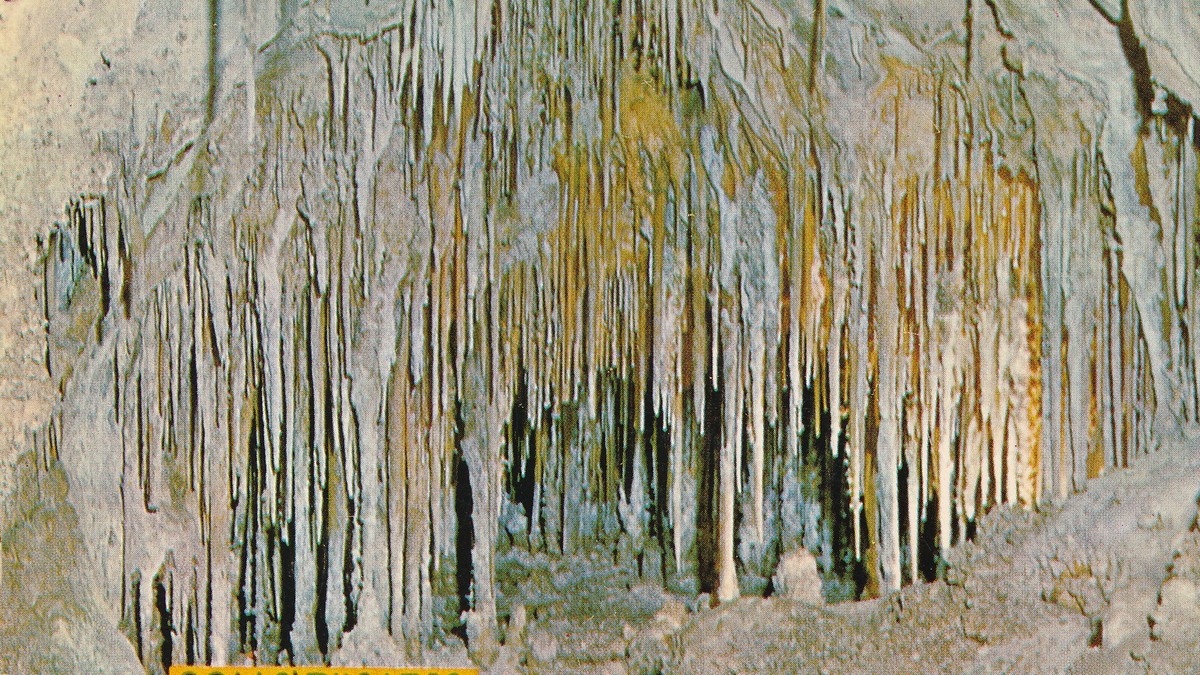
When subterranean passages drain due to regional river incision, the cave enters its vadose depositional phase. Descending groundwater entering the air-filled cave chamber encounters a lower CO₂ partial pressure than in the soil above. To equilibrate, dissolved CO₂ exsolves (degasses) from the water droplets into the cave atmosphere. Degassing forces calcite to precipitate, constructing breathtaking secondary mineral formations termed speleothems: stalactites, stalagmites, flowstones, and draperies.
In paleoclimatology, stalagmites are revered as nature’s ultimate high-resolution climate archives. By analyzing stable oxygen isotopes (δ¹⁸O), carbon isotopes (δ¹³C), and trace elements (Mg/Ca, Sr/Ca) in stalagmite growth rings dated precisely via Uranium-Thorium (U-Th) mass spectrometry, scientists reconstruct past rainfall, temperature, and vegetation changes with sub-annual resolution stretching back over 600,000 years.
6. Karst Geomorphology and Environmental Hydrogeology Hazards
At the surface, karst landscapes exhibit distinctive landforms: sinkholes (dolines), disappearing streams, blind valleys, poljes, and towering cockpit/tower karst (such as the picturesque towers of Guilin, China, and Halong Bay, Vietnam). However, karst terrains present severe environmental hazards:
1. Catastrophic Sinkhole Collapse: Cover-collapse sinkholes occur when subterranean cavities undermine overlying unconsolidated sediment, swallowing buildings, highways, and infrastructure without warning.
2. Groundwater Contamination Vulnerability: In standard sand-and-gravel aquifers, granular sediment naturally filters pollutants. In karst aquifers, conduit flow behaves like underground plumbing pipes: industrial spills, agricultural pesticides, and sewage enter sinkholes directly and travel at velocities of kilometers per day with zero mechanical filtration, contaminating regional drinking water springs within hours.
7. Geothermal and Deep Phreatic Speleogenesis: Thermal Sulfide Systems
Beyond meteoric carbonic acid dissolution and basin-derived hydrogen sulfide systems, extensive cavernous networks form through thermal speleogenesis driven by deep circulating geothermal fluids. In volcanic and active extensional tectonic settings—such as the Budapest thermal karst system in Hungary and the Movile Cave system in Romania—groundwater is heated by deep geothermal gradients or cooling magmatic intrusions to temperatures of 40°C to 70°C.
Ascending through deep regional fault conduits, these hydrothermal waters carry high concentrations of dissolved minerals, carbonic acid, and hydrogen sulfide. As warm water approaches the surface, convective heat transfer drives vigorous circular water loops that dissolve spectacular spherical dissolution domes, ceiling cupolas, and multi-tiered three-dimensional maze networks (spongework caves). In Movile Cave, this hydrothermal sulfide-rich environment supports a completely isolated chemoautotrophic ecosystem that has thrived for over 5 million years in complete absence of solar energy, relying on sulfur-oxidizing bacteria as primary producers.
8. Quantitative Dye Tracing and Dual-Porosity Aquifer Modeling
Because karst aquifers deviate radically from Darcy’s Law governing standard porous media, hydrogeologists employ quantitative dye tracing to delineate subterranean flow paths. Non-toxic fluorescent tracer dyes—most commonly Sodium Fluorescein (Uranine), Rhodamine WT, and Optical Brighteners—are injected into sinking streams or swallets during diverse hydrological flow regimes.
Downstream resurgence springs and monitoring wells are instrumented with automated spectrofluorometers and activated charcoal passive detectors. By constructing dye breakthrough curves, hydrogeologists calculate crucial transport parameters: peak travel times, longitudinal dispersion coefficients, and effective conduit volumes. Flow velocities through karst conduits routinely measure from 100 to over 1,500 meters per hour, proving that subterranean karst rivers operate as turbulent pipe networks that bypass the surrounding bedrock matrix completely.
🪨 Karst Groundwater Protection
Due to ultra-rapid conduit velocities, karst springs have virtually zero filtration or natural purification capacity. Delineating subterranean karst basins via dye tracing is legally mandatory for establishing wellhead protection zones and safeguarding municipal drinking water supplies.
9. Paleokarst and Hydrocarbon Reservoirs in Ancient Carbonate Platforms
Beyond active modern cave systems, ancient paleokarst plays a vital role in global economic geology and energy resources. When regional sea levels drop dramatically, vast shallow-water carbonate platforms (such as the Paleozoic carbonate ramps of the Permian Basin in Texas or the Tarim Basin in China) are subaerially exposed to rainfall and meteoric groundwater dissolution for millions of years.
This prolonged subaerial exposure carves extensive subterranean cavern networks, sinkholes, and breccia collapse pipes throughout the limestone strata. When sea levels subsequently rise during subsequent marine transgressions, these karstified terrains are submerged and buried beneath hundreds to thousands of meters of impermeable marine shales or evaporites. The preserved subterranean cave passages and dissolution fractures create prolific secondary vuggy and cavernous porosity networks—often exceeding 20% to 35% bulk porosity—that act as super-giant subsurface reservoirs for petroleum, natural gas, and helium accumulation.
10. Microclimates and Speleothem Growth Dynamics in Deep Caves
Inside deep, unventilated cave chambers located beyond the reach of surface temperature fluctuations, the cave atmosphere maintains remarkable microclimatic stability. Relative humidity hovers perpetually at 99% to 100%, and ambient air temperatures match the mean annual surface air temperature of the overlying region to within 0.1°C. This extreme thermal equilibrium is essential for the continuous, slow precipitation of speleothems.
The vertical growth rate of stalagmites is governed by the drip rate, the calcium ion supersaturation of the drip water, and the thickness of the liquid water film coating the stalagmite apex (typically 100 micrometers thick). Under stable conditions, stalagmites grow at rates of 0.01 to 0.5 millimeters per year, recording subtle seasonal shifts in regional monsoons, droughts, and volcanic aerosol eruptions in their micro-stratigraphic luminescent laminae.
🪨 Speleological Research Milestone
High-precision Uranium-Thorium dating of pristine stalagmite layers from caves in China (such as Hulu and Sanbao Caves) provided the primary absolute chronological calibration for the global ice-core records of Heinrich and Dansgaard-Oeschger rapid climate events during the last glacial period.
11. Biospeleology: Evolutionary Adaptations of Stygobitic Fauna
The subterranean voids of karst aquifers host some of the most specialized and fragile ecological communities on Earth: troglobites (terrestrial cave-dwellers) and stygobites (aquatic cave-dwellers). Subterranean animals have evolved extreme physiological and morphological adaptations termed troglomorphism: complete loss of ocular vision and eyes (anophthalmia), total loss of skin pigmentation (depigmentation), elongated sensory antennae and tactile appendages, and metabolic rates reduced by up to 80% relative to surface relatives to survive in nutrient-starved subterranean ecosystems.
Famous examples include the blind cave salamander (Proteus anguinus, the Olm of Slovenian karst caves) and blind cavefish (Astyanax mexicanus). These ancient subterranean lineages represent living fossil relics that survived multiple surface ice ages and mass extinction events by finding sanctuary within stable, subterranean karst groundwater networks.