Why Gemstones Have Different Colors Trace Elements, Crystal Structure, and Light
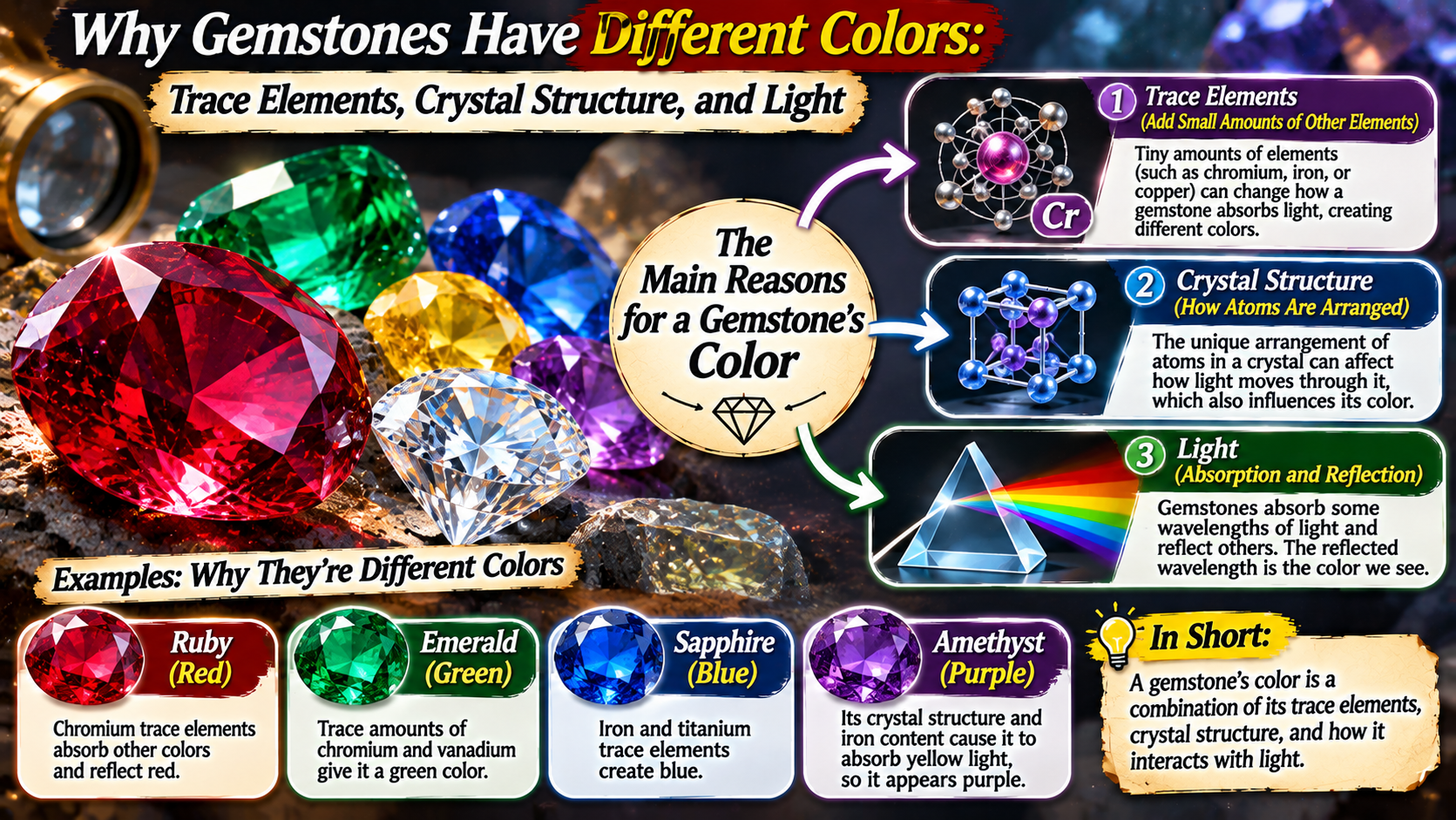
GEMOLOGY JOURNAL ยท MINERALS & OPTICAL SCIENCE The Hidden Science Behind Gemstone Colors Explore how tiny amounts of chemical elements, crystal structures, and interactions with light create the remarkable colors of natural gemstones. TRACE ELEMENTS CRYSTAL STRUCTURE LIGHT & COLOR Gemstones display an extraordinary range of colors. Rubies are famous for their red appearance, emeralds … Read more
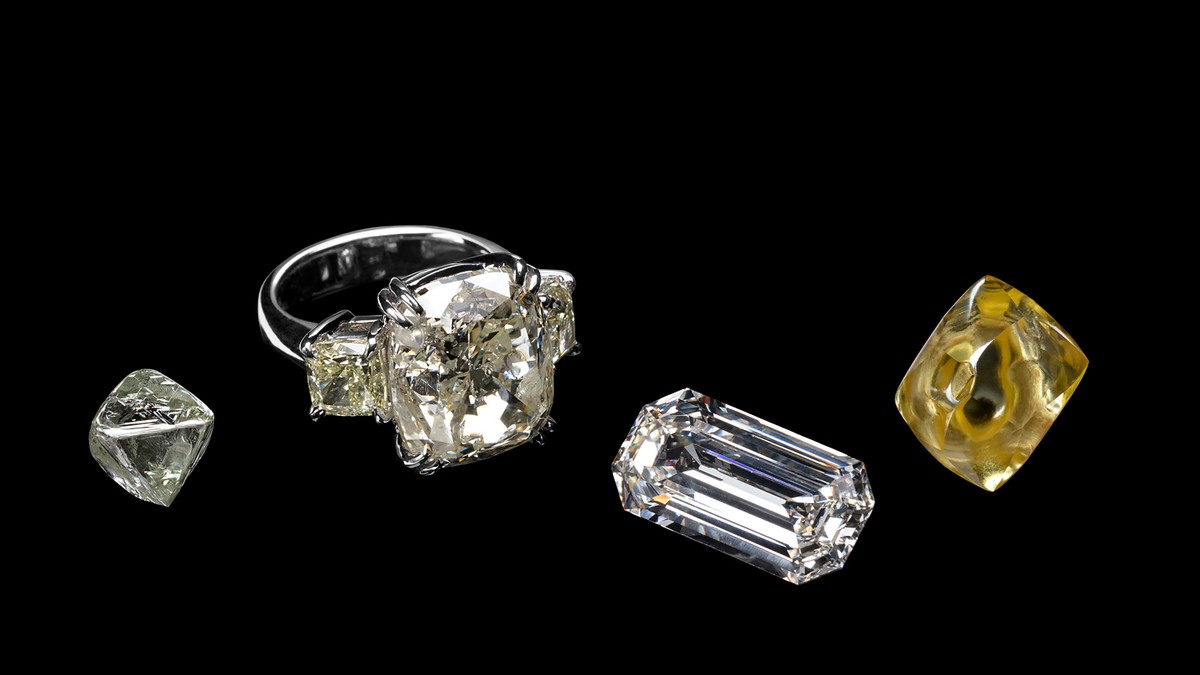
Diamond Petrogenesis: Deep Mantle Kimberlite Pipes, Carbon High-Pressure Polymorphs, and Cratonic Keels

Geological illustration of Diamond Petrogenesis: Deep Mantle Kimberlite Pipes, Carbon High-Pressure Polymorphs, and Cratonic Keels

๐Ÿ’Ž Mantle Petrology Fundamental: Diamonds as Ancient Geochemical Time Capsules Diamonds are not born within crustal coal beds as common folklore suggests; rather, they are deep mantle xenocrysts crystallized at extreme depths exceeding 140 to 250 kilometers beneath Archaean continental cratonic keels. With crystallization ages frequently dating between 1.0 and 3.5 billion years, diamonds represent … Read more

The Corundum Family: Trace-Element Geochemistry of Gem Rubies, Blue Sapphires, and Basaltic vs. Metamorphic Deposits

Geological illustration of The Corundum Family: Trace-Element Geochemistry of Gem Rubies, Blue Sapphires, and Basaltic vs. Metamorphic Deposits

๐Ÿ’Ž Mineralogical Benchmark: The Pure Oxide Matrix of Corundum Corundum (alpha-Alโ‚‚Oโ‚ƒ) is one of the most structurally robust and thermodynamically stable oxide minerals on Earth. Pure corundum is completely colorless, optically transparent, and chemically unreactive, exhibiting a high refractive index (n = 1.762โ€“1.770), remarkable specific gravity (3.98โ€“4.05), and an exceptional Mohs hardness of 9โ€”second only … Read more

Pegmatitic Gemstones: Petrogenesis of Gem Beryl (Emerald, Aquamarine), Tourmaline, Topaz, and LCT-Pegmatite Pocket Evolution

Geological illustration of Pegmatitic Gemstones: Petrogenesis of Gem Beryl (Emerald, Aquamarine), Tourmaline, Topaz, and LCT-Pegmatite Pocket Evolution

๐Ÿ’Ž Magmatic Differentiation Zenith: The Pegmatite Phenomenon Granitic pegmatites represent the final, volatile-supersaturated dregs of enormous crystallizing granite batholiths. Enriched in fluxing volatilesโ€”water, boron, fluorine, phosphorus, and lithiumโ€”and incompatible trace elements excluded from common rock-forming minerals, pegmatitic melts crystallize into nature’s most spectacular mineralogical museums, hosting enormous, euhedral crystals of beryl, multi-colored tourmalines, topaz, and … Read more

Phenomenal Optical Gemstones: Light Interference, Asterism, Chatoyancy, Adularescence, and Opal Photonic Crystals

Geological illustration of Phenomenal Optical Gemstones: Light Interference, Asterism, Chatoyancy, Adularescence, and Opal Photonic Crystals

โœจ Optical Crystallography: The Physics of Gemstone Phenomena While standard gemstone beauty relies on color absorption and faceted light reflection, ‘phenomenal gemstones’ exhibit astonishing dynamic optical effects governed by physical wave optics: diffraction, interference, light scattering, and structural reflection off crystallographically oriented inclusions or nanoscale repeating lattices. These phenomena transform inert mineral specimens into living, … Read more