Rock Atlas • Global Geoscience Archive • 2026 Edition

The Comprehensive Field Guide to Geology, Rocks & Minerals

Explore over 43,000 words of rigorous petrological dissertations, mineral crystallography, gemstone petrogenesis, and deep-time stratigraphy authored by Lead Geologist Berta Stracke.

🪨 Rock Types 💎 Minerals ✨ Gemstones 🏔️ Formations 🌋 Rock Cycle
Explore 20 Field Dissertations ↓

Karst Hydrogeology and Speleogenesis: Carbonate Dissolution, Phreatic Conduits, and Cave Networks
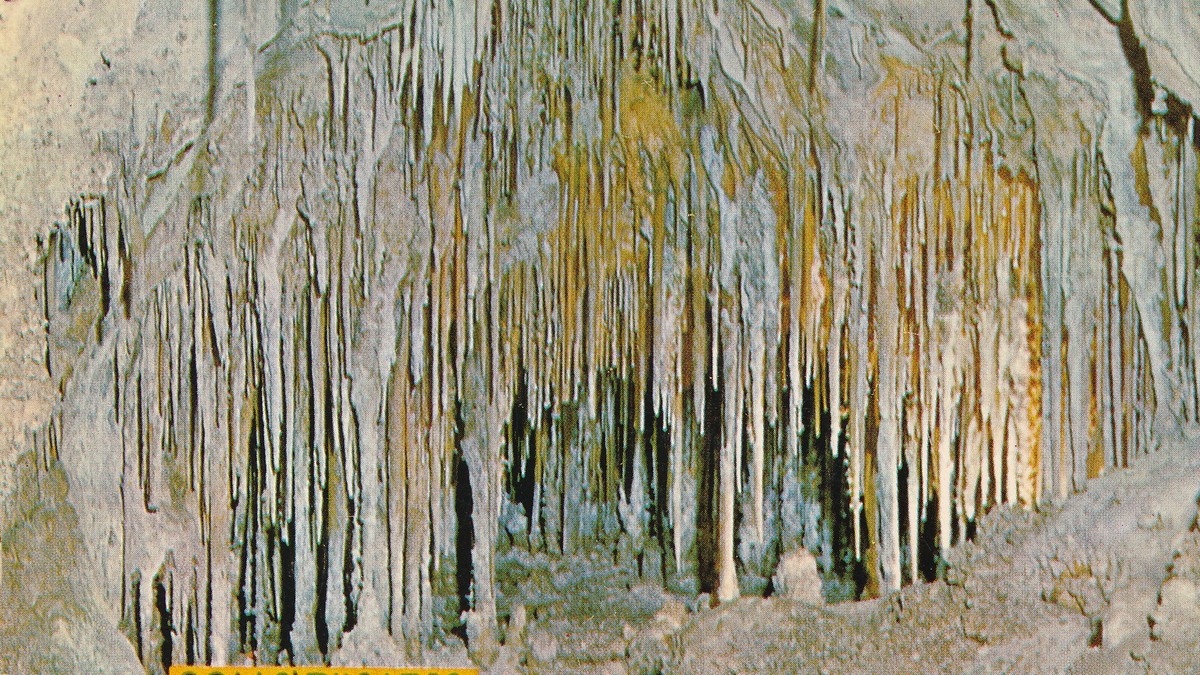
Geological illustration of Karst Hydrogeology and Speleogenesis: Carbonate Dissolution, Phreatic Conduits, and Cave Networks

🦇 Subterranean Geomorphology: The World Beneath Our Feet Karst landscapes and subterranean cave systems represent one of Earth’s most intricate geological phenomena. Encompassing over 20 percent of the planet’s ice-free continental landmass and supplying potable drinking water to nearly a quarter of humanity, karst systems are sculpted not by mechanical river abrasion, but by aqueous … Read more

Stratigraphy of the Colorado Plateau: Deep Time Sequences of the Grand Canyon Supergroup

Geological illustration of Stratigraphy of the Colorado Plateau: Deep Time Sequences of the Grand Canyon Supergroup

🏜️ Stratigraphic Masterpiece: Two Billion Years of Earth History Exposed The Colorado Plateau of the American Southwest is the world’s premier natural stratigraphic laboratory. Within the 1.6-kilometer-deep vertical incisions of the Grand Canyon, horizontal sedimentary strata, tilted Proterozoic basins, and crystalline metamorphic basements lay bare an unbroken chronicle spanning nearly two billion years of Earth’s … Read more

Diamond Petrogenesis: Deep Mantle Kimberlite Pipes, Carbon High-Pressure Polymorphs, and Cratonic Keels

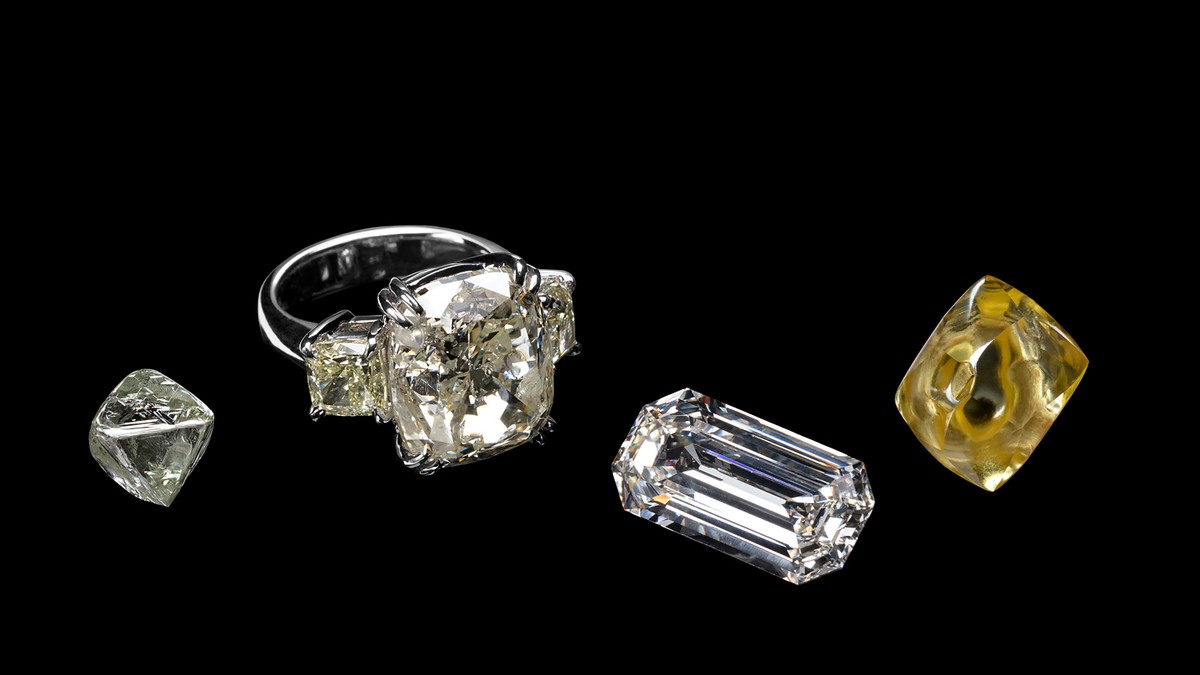
Geological illustration of Diamond Petrogenesis: Deep Mantle Kimberlite Pipes, Carbon High-Pressure Polymorphs, and Cratonic Keels

💎 Mantle Petrology Fundamental: Diamonds as Ancient Geochemical Time Capsules Diamonds are not born within crustal coal beds as common folklore suggests; rather, they are deep mantle xenocrysts crystallized at extreme depths exceeding 140 to 250 kilometers beneath Archaean continental cratonic keels. With crystallization ages frequently dating between 1.0 and 3.5 billion years, diamonds represent … Read more

The Corundum Family: Trace-Element Geochemistry of Gem Rubies, Blue Sapphires, and Basaltic vs. Metamorphic Deposits

Geological illustration of The Corundum Family: Trace-Element Geochemistry of Gem Rubies, Blue Sapphires, and Basaltic vs. Metamorphic Deposits

💎 Mineralogical Benchmark: The Pure Oxide Matrix of Corundum Corundum (alpha-Al₂O₃) is one of the most structurally robust and thermodynamically stable oxide minerals on Earth. Pure corundum is completely colorless, optically transparent, and chemically unreactive, exhibiting a high refractive index (n = 1.762–1.770), remarkable specific gravity (3.98–4.05), and an exceptional Mohs hardness of 9—second only … Read more

Pegmatitic Gemstones: Petrogenesis of Gem Beryl (Emerald, Aquamarine), Tourmaline, Topaz, and LCT-Pegmatite Pocket Evolution

Geological illustration of Pegmatitic Gemstones: Petrogenesis of Gem Beryl (Emerald, Aquamarine), Tourmaline, Topaz, and LCT-Pegmatite Pocket Evolution

💎 Magmatic Differentiation Zenith: The Pegmatite Phenomenon Granitic pegmatites represent the final, volatile-supersaturated dregs of enormous crystallizing granite batholiths. Enriched in fluxing volatiles—water, boron, fluorine, phosphorus, and lithium—and incompatible trace elements excluded from common rock-forming minerals, pegmatitic melts crystallize into nature’s most spectacular mineralogical museums, hosting enormous, euhedral crystals of beryl, multi-colored tourmalines, topaz, and … Read more

Phenomenal Optical Gemstones: Light Interference, Asterism, Chatoyancy, Adularescence, and Opal Photonic Crystals

Geological illustration of Phenomenal Optical Gemstones: Light Interference, Asterism, Chatoyancy, Adularescence, and Opal Photonic Crystals

✨ Optical Crystallography: The Physics of Gemstone Phenomena While standard gemstone beauty relies on color absorption and faceted light reflection, ‘phenomenal gemstones’ exhibit astonishing dynamic optical effects governed by physical wave optics: diffraction, interference, light scattering, and structural reflection off crystallographically oriented inclusions or nanoscale repeating lattices. These phenomena transform inert mineral specimens into living, … Read more

Physical Mineralogy: Mohs Hardness Scale, Cleavage Crystallography, Birefringence, and Piezoelectricity

Geological illustration of Physical Mineralogy: Mohs Hardness Scale, Cleavage Crystallography, Birefringence, and Piezoelectricity

💎 Physical Mineralogy: The Macroscopic Window to Atomic Bonding Physical mineralogy investigates the macroscopic mechanical, optical, electrical, and magnetic properties of minerals. These observable physical characteristics are not arbitrary quirks of nature; they are the direct, deterministic manifestation of internal crystal chemistry, atomic packing densities, and the spatial anisotropy of chemical lattice bonds. 1. The … Read more

Non-Silicate Ore Minerals: Sulfides, Native Elements, Oxides, and Hydrothermal Vein Metallogeny

Geological illustration of Non-Silicate Ore Minerals: Sulfides, Native Elements, Oxides, and Hydrothermal Vein Metallogeny

⛏️ Economic Metallogeny: Concentration of Rare Elements from the Crust While silicate minerals form the bulk rock mass of Earth’s crust, human civilization is powered by non-silicate minerals: the sulfides, oxides, carbonates, and native elements that constitute commercial metal ores. Because essential industrial metals (such as copper, gold, lead, zinc, and lithium) have crustal abundances … Read more

Crystallography and Space Groups: Miller Indices, Bravais Lattices, and X-Ray Powder Diffraction (XRD)

Geological illustration of Crystallography and Space Groups: Miller Indices, Bravais Lattices, and X-Ray Powder Diffraction (XRD)

🔮 Crystallographic Core: The Symmetry of Ordered Matter A mineral is scientifically defined not merely by its chemical composition, but by its internal, orderly, repeating three-dimensional arrangement of atoms—its crystalline lattice. Crystallography provides the rigorous mathematical framework that bridges the sub-angstrom atomic world with the macroscopic morphology, cleavages, and optical properties of mineral crystals. 1. … Read more

Silicate Mineralogy: Tectosilicate Frameworks, Phyllosilicate Sheets, and Inosilicate Chain Coordination

Geological illustration of Silicate Mineralogy: Tectosilicate Frameworks, Phyllosilicate Sheets, and Inosilicate Chain Coordination

💎 Mineralogical Cornerstone: The Silicon-Oxygen Tetrahedron Silicate minerals constitute over 90 percent of the Earth’s crust and virtually the entire mantle. The fundamental architectural building block of all silicates is the silicon-oxygen tetrahedron [SiO₄]⁴⁻, consisting of a central tetravalent silicon cation (Si⁴⁺) coordinated with four divalent oxygen anions (O²⁻) in a robust, covalently bonded tetrahedral … Read more