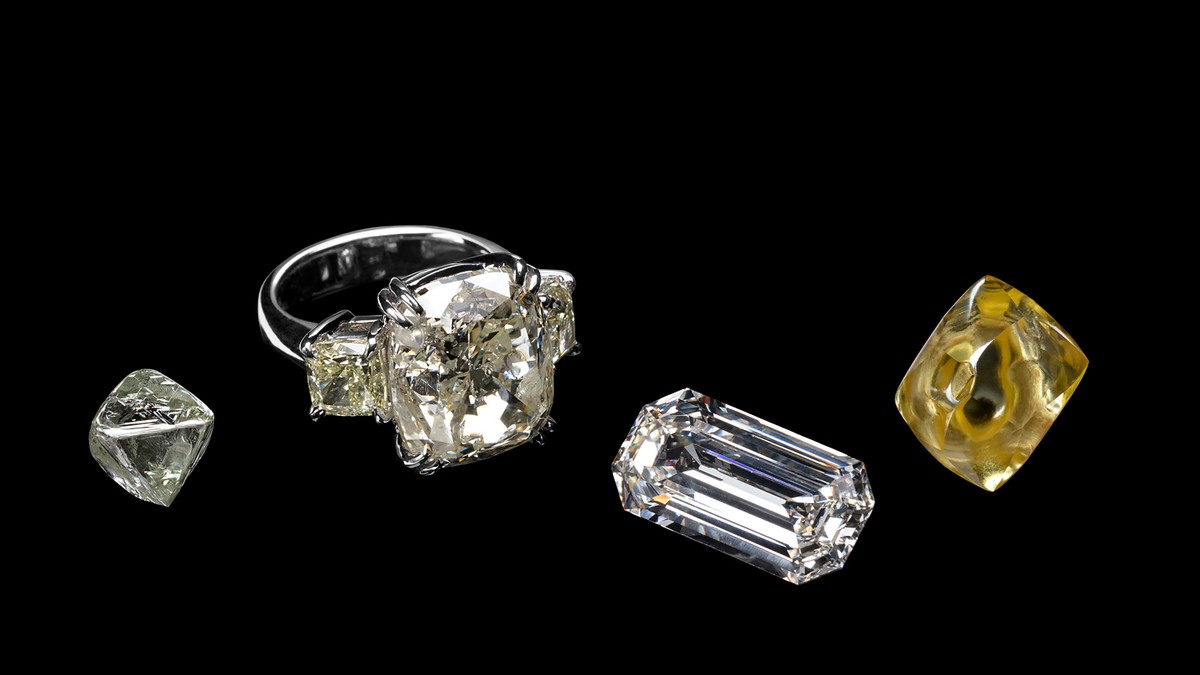
💎 Mantle Petrology Fundamental: Diamonds as Ancient Geochemical Time Capsules
Diamonds are not born within crustal coal beds as common folklore suggests; rather, they are deep mantle xenocrysts crystallized at extreme depths exceeding 140 to 250 kilometers beneath Archaean continental cratonic keels. With crystallization ages frequently dating between 1.0 and 3.5 billion years, diamonds represent the oldest tangible geological artifacts accessible on Earth’s surface, preserving pristine, unaltered isotopic signatures and mineral inclusions from the primordial mantle.
1. The Carbon Phase Diagram: Graphite vs. Diamond Metastability
Elemental carbon exhibits extraordinary structural polymorphism dictated by thermodynamic pressure and temperature regimes. At standard ambient atmospheric temperatures and pressures, pure carbon crystallizes as graphite—a stable hexagonal allotrope characterized by planar sheets of covalently bonded sp²-hybridized carbon atoms arranged in honeycomb aromatic rings, linked to adjacent parallel sheets solely by weak van der Waals dispersion forces. This anisotropic bonding imparts graphite with its characteristic basal cleavage, high electrical conductivity, and softness (Mohs 1–2).
Under extreme hydrostatic pressures exceeding 4.5 to 5.5 gigapascals (GPa) at temperatures ranging from 950°C to 1,350°C, the carbon electron orbitals undergo complete rehybridization from sp² into isotropic sp³ covalent bonds. The resulting mineral phase is diamond, belonging to the cubic crystal system (space group Fd-3m). In diamond, every carbon atom is tetrahedrally bonded to four adjacent carbon neighbors with an exceptionally short interatomic bond length of 1.54 Å. This rigid, interlocking three-dimensional tetrahedral covalent framework bestows diamond with unparalleled physical attributes: the highest indentation hardness (Mohs 10, Vickers 100 GPa), the highest thermal conductivity of any known bulk solid (exceeding 2,200 W/(m·K) at room temperature), and high refractive dispersion (index 2.417; dispersion 0.044).
Significantly, diamond is thermodynamically metastable at Earth’s surface. The transformation of diamond back into the thermodynamically stable graphite phase has an activation energy barrier of approximately 730 kJ/mol. Because ambient surface temperatures do not provide sufficient kinetic thermal energy to break tetrahedral sp³ covalent bonds, diamonds persist indefinitely across billions of years without graphitizing—a classic demonstration of kinetic stabilization outlasting thermodynamic equilibrium.
2. Archaean Cratonic Keels and Diamond Stability Fields
The physical conditions required for stable diamond growth occur only within specific geological architecture: the deep lithospheric mantle roots underlying ancient Archaean cratons (continental cores older than 2.5 billion years, such as the Kaapvaal, Siberian, Slave, and Superior cratons). These thick lithospheric roots, termed cratonic keels, extend to depths of 200 to 250 kilometers into the upper mantle.
Due to the high thermal insulating capacity and low radiogenic heat production of depleted cratonic lithosphere, cratonic keels maintain anomalously low geothermal gradients—typically between 38 and 42 mW/m²—known as ‘cold’ cratonic geotherms. When this shallow geotherm intersects the thermodynamic graphite-diamond equilibrium boundary (the Berman-Simon reaction line), a volumetric zone of diamond stability is established between depths of 140 km and 220 km (pressures of 4.5 to 7.0 GPa), within temperature windows of 900°C to 1,300°C. This specific thermodynamic horizon is termed the cratonic diamond stability window.
In contrast, beneath modern oceanic lithosphere or younger Phanerozoic mobile belts, the geotherm is substantially steeper (higher temperatures at shallower depths). The oceanic geotherm intersects the melting solidus of mantle peridotite long before reaching the diamond stability boundary, precluding diamond preservation outside rigid cratonic blocks. This structural requirement explains Clifford’s Rule: economically viable primary diamond deposits are strictly restricted to the internal boundaries of Archaean cratons.
| Craton Name | Geographical Region | Keel Depth (km) | Dominant Diamond Host Xenolith | Major Primary Kimberlite Pipes |
|---|---|---|---|---|
| Kaapvaal Craton | Southern Africa | 200 – 220 km | Peridotitic (harzburgitic) & Eclogitic | Kimberley, Venetia, Premier (Cullinan), Jwaneng |
| Siberian Craton | Yakutia, Russia | 210 – 240 km | Harzburgitic, Dunite & Eclogitic | Mir, Udachnaya, Aikhal, Jubileynaya |
| Slave Craton | Northwest Territories, Canada | 200 – 230 km | Eclogitic & Peridotitic layered | Ekati, Diavik, Gahcho Kué |
| Superior Craton | Ontario / Quebec, Canada | 190 – 220 km | Eclogitic & Pyroxenitic | Victor Pipe (James Bay Lowlands) |
| Yilgarn Craton | Western Australia | 180 – 210 km | Lamproitic Eclogitic | Argyle Pipe (AK1 – Olivine Lamproite) |
3. Kimberlite and Lamproite Magmatism: Supersonic Deep-Earth Elevators
Diamonds do not crystallize out of kimberlite magma; rather, kimberlitic and lamproitic magmas act merely as passive volcanic transport vehicles—deep-seated ‘elevators’ that violently sample pre-existing diamondiferous mantle rocks and blast them up to the Earth’s surface. Kimberlites are ultrabasic, volatile-rich (CO₂ and H₂O) potassic igneous rocks originating from asthenospheric or transition-zone depths exceeding 150 to 300 kilometers.
The ascent of kimberlite magma is driven by catastrophic volatile exsolution. As the mantle melt rises along deep lithospheric fault splays, dissolved carbon dioxide and water exsolve from the silicate melt, dramatically lowering bulk magma density and triggering explosive gas expansion. Mathematical modeling indicates that during the final stages of crustal ascent, kimberlitic magma velocities accelerate from 10 to 30 km/h in the deep lithosphere to supersonic speeds exceeding 100 to 400 km/h in the uppermost crust.
This rapid transit time—taking merely hours or days to travel from mantle depths to surface eruption—is essential for diamond survival. If kimberlite magma ascended sluggishly at normal basaltic volcanic velocities, the prolonged residence time at high temperatures and low crustal pressures would cause all sampled diamonds to undergo thermal oxidation and complete conversion into graphite, or dissolve into the carbon dioxide gas phase. Near the surface, violent explosive decompression excavates vertical, carrot-shaped diatremes, or volcanic kimberlite pipes, lined with explosive kimberlite breccia (tuffisitic kimberlite) and containing mantle xenoliths and xenocrystic gem diamonds.
4. Nitrogen Aggregation Geothermometry and Diamond Typology
In addition to pure carbon, real natural diamonds incorporate trace atomic impurities into their crystal lattice, the most significant of which is nitrogen (N). Because neutral nitrogen has a covalent radius (0.75 Å) nearly identical to carbon (0.77 Å), nitrogen atoms readily substitute for carbon during mantle growth. Based on the concentration and spatial aggregation state of nitrogen detected via Fourier Transform Infrared (FTIR) spectroscopy, diamonds are classified into four major optical types:
- Type Ia (98% of natural diamonds): Contains high concentrations of nitrogen (up to 3,000 ppm) aggregated into sub-microscopic clusters. In Type IaA, nitrogen occurs as isolated pairs of neutral atoms (A-centers). With extended mantle residence time at high temperatures, A-centers migrate into Type IaB centers consisting of four nitrogen atoms symmetrically surrounding a vacant carbon site (B-centers or B-aggregates). Type Ia diamonds appear colorless to pale yellow.
- Type Ib (<0.1% of natural diamonds): Contains singly dispersed, isolated nitrogen atoms residing on single carbon substitution sites (C-centers). Dispersed nitrogen absorbs strongly in the blue spectrum, imparting an intense, saturated golden canary yellow color. Rare in nature (common in synthetic HPHT diamonds).
- Type IIa (1–2% of natural diamonds): Chemically pure carbon with virtually no detectable nitrogen or boron (<1–5 ppm). Type IIa diamonds exhibit the highest optical clarity and exceptional thermal conductivity. Celebrated historical gems—such as the Cullinan, Koh-i-Noor, and Lesedi La Rona—are Type IIa specimens. When subjected to plastic deformation in the mantle, Type IIa crystals exhibit slip planes that impart rare brown, pink, or red body colors.
- Type IIb (<0.1% of natural diamonds): Extremely rare diamonds containing trace trivalent boron (B³⁺) substituting for tetravalent carbon. Boron introduces acceptor electron hole states within the diamond bandgap, transforming Type IIb diamonds into p-type semiconductors and imparting a striking steely-gray to vivid ocean-blue color (exemplified by the legendary 45.52-carat Hope Diamond).
🔬 Nanoscale Geothermometry: The Nitrogen Clock
Because the atomic diffusion rate of nitrogen within the diamond crystal lattice is strictly dictated by Arrhenius temperature kinetics, the ratio of B-centers to A-centers measured by FTIR spectroscopy allows petrologists to calculate the exact mantle residence temperature and storage duration of a diamond across hundreds of millions of years of cratonic stability.
5. Mineral Inclusions: Pristine Windows into Archean Mantle Geochemistry
During crystallization within the deep cratonic lithosphere, diamonds mechanically encapsulate tiny ambient mineral crystals into hermetically sealed, chemically inert cavities. Because diamond has an extraordinarily rigid crystal lattice with virtually zero atomic diffusivity, these syngenetic mineral inclusions are completely insulated from subsequent metasomatic fluids, magma reheating, and weathering. When released by laser cutting or micro-crushing in laboratories, diamond inclusions reveal two fundamentally distinct lithospheric parageneses:
1. Peridotitic (P-type) Diamonds: Crystallized within depleted harzburgite, dunite, and lherzolite mantle rocks. P-type inclusions include chrome-rich pyrope garnet (purple to lilac-pink), forsteritic olivine (Fo₉₂ to Fo₉₅), chrome diopside (vivid emerald green), and chromite. The high Cr₂O₃ content (>4–12 wt.%) and low CaO content of P-type pyrope garnets indicate that peridotitic diamonds formed within residual mantle keels that had experienced massive melt extraction during Archaean komatiitic magmatism.
2. Eclogitic (E-type) Diamonds: Crystallized within high-pressure metamorphosed oceanic crust. E-type inclusions consist of orange almandine-pyrope garnets enriched in calcium and iron, sodic omphacite clinopyroxene, kyanite, coesite, and iron-nickel sulfides. Oxygen isotope ratios (δ¹⁸O) in eclogitic diamond inclusions deviate substantially from standard pristine mantle values (+5.7‰), exhibiting both depleted (+2‰) and enriched (+10‰ to +14‰) values diagnostic of low-temperature seafloor hydrothermal alteration. This provides irrefutable geochemical evidence that ancient oceanic basalt was hydrothermally altered on Archaean ocean floors, subducted to depths exceeding 150–200 km, and metamorphosed into eclogite, where organic or marine carbonate carbon crystallized into diamond.
6. Sub-Lithospheric and Super-Deep Diamonds from the Earth’s Transition Zone and Lower Mantle
While the vast majority of commercial diamonds originate from lithospheric cratonic keels (140–220 km), a scientifically extraordinary cohort of gems known as sub-lithospheric or super-deep diamonds originates from depths ranging from 410 to over 800 kilometers—penetrating the mantle transition zone and the lower mantle. These gems, representing less than 1 percent of all diamonds, are identified by unique high-pressure mineral inclusion assemblages that undergo retrograde breakdown upon decompression:
- Majoritic Garnet: In the upper mantle, garnet and pyroxene exist as distinct phases. Between 410 and 660 km depth, pyroxene dissolves completely into the garnet structure via silicon substitution into octahedral coordination, forming majorite. Super-deep diamonds encapsulate majoritic garnets that preserve high excess silicon (>3.0 cations per 12 oxygen formula unit).
- Ringwoodite and Bridgmanite Inclusions: In 2014, researchers discovered a microscopic inclusion of hydrous ringwoodite (the high-pressure polymorph of olivine stable between 525 and 660 km) in a super-deep diamond from Juína, Brazil. The inclusion contained 1.4 weight percent water bound within its crystal structure, providing the first direct physical proof that Earth’s transition zone contains vast oceans worth of water dissolved in high-pressure minerals. In 2021, an inclusion of davemaoite (cubic calcium silicate perovskite, CaSiO₃-perovskite) was discovered inside a deep diamond, confirming the petrological composition of the lower mantle past 660 km depth.
- CLIPPIR Diamonds: Large, gem-quality, boron-bearing Type IIb diamonds (such as the Cullinan and Constellation) belong to a genetic class termed CLIPPIR (Cullinan-like, Large, Inclusion-Poor, Pure, Irregular, and Resorbed). Studies indicate that CLIPPIR diamonds crystallize within metallic iron-nickel-carbon-sulfur liquid melt pockets surrounded by iron carbide and iron sulfide phases at depths between 360 and 750 km, demonstrating that metallic iron liquid exists in the deep reducing mantle.
🌍 Analytical Gemological Synthesis
From the perspective of advanced earth systems science, diamonds are far more than precious aesthetic luxuries; they are unparalleled geological probes that convey pristine physical samples of volatile cycling, mantle hydration, ancient subduction tectonics, and deep metallic melts from the deepest inaccessible interior of our planet directly to surface laboratories.
7. Synthetic Diamond Synthesis: HPHT vs. Chemical Vapor Deposition (CVD)
In addition to natural diamond petrogenesis, modern industrial physics has mastered the laboratory synthesis of single-crystal diamond. Two fundamentally distinct engineering methodologies replicate and bypass mantle conditions:
1. High-Pressure High-Temperature (HPHT) Growth: Pioneered by General Electric in 1954 and refined by the BARS (split-sphere) and cubic press apparatuses, HPHT synthesis directly recreates cratonic keel thermodynamic conditions. Pressures of 5.5 to 6.5 GPa and temperatures of 1,300°C to 1,600°C are generated using hydraulic carbide anvils. High-purity graphite powder dissolves into a molten transition metal solvent-catalyst (iron, nickel, or cobalt alloy), migrating down a thermal gradient to precipitate epitaxially onto a tiny diamond seed crystal. HPHT diamonds typically exhibit cuboctahedral morphology with distinct metallic flux inclusions.
2. Chemical Vapor Deposition (CVD) Synthesis: In radical contrast to mantle thermodynamics, CVD grows gem-quality diamond under near-vacuum conditions (0.1 atmospheres) and moderate temperatures (800°C–1,000°C), inside the thermodynamic stability field of graphite. A microwave plasma reactor cracks methane (CH₄) and hydrogen (H₂) gas into energized hydrocarbon radicals and atomic hydrogen. Atomic hydrogen selectively etches away any spontaneously nucleating graphite sp² bonds thousands of times faster than diamond sp³ bonds, allowing diamond to grow layer-by-atomic-layer onto a planar diamond substrate. Gemological laboratories identify CVD diamonds by diagnostic dislocation networks, photoluminescence silicon-vacancy (SiV⁻) optical defects, and lack of mantle nitrogen aggregation.
🪨 Diagnostic Gemological Verification
Advanced spectroscopic testing using liquid-nitrogen cooled photoluminescence spectroscopy (PL at 77 K) and DiamondView deep-UV fluorescence imaging detects the telltale phosphorescence patterns and defect centers that definitively distinguish natural Archean mantle diamonds from lab-grown specimens.