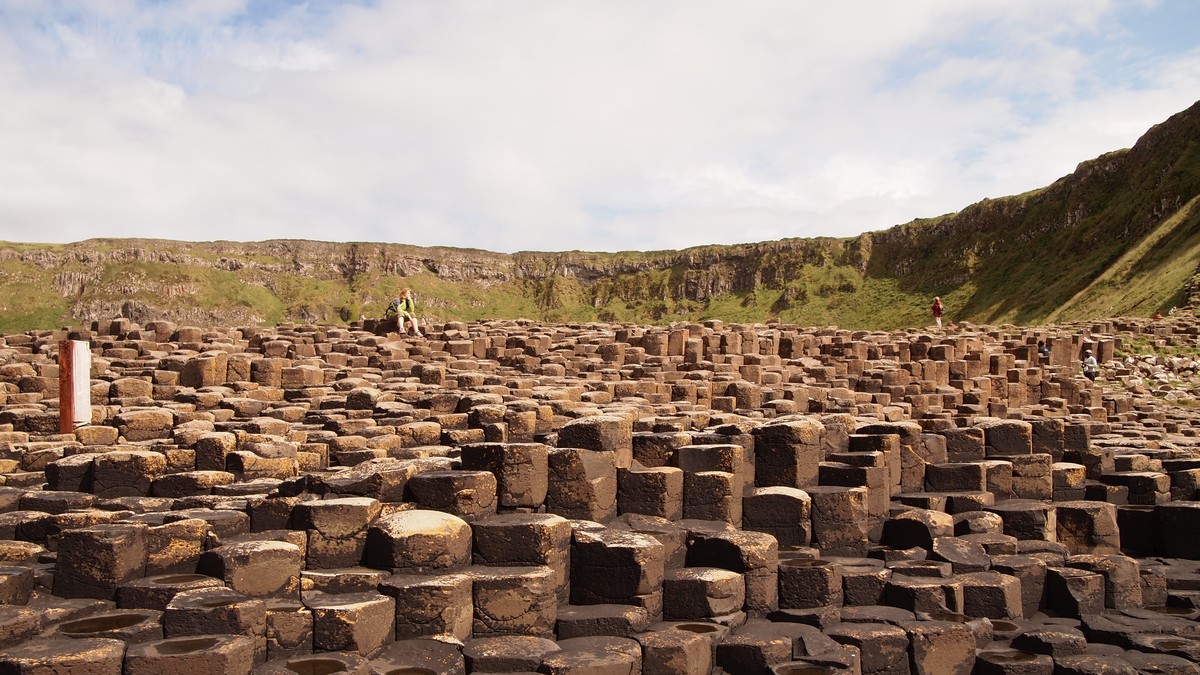
🌋 Petrological Fundamental: Primary Magma Generation & Thermodynamics
Igneous rocks constitute over 90 percent of the Earth’s uppermost crust by volume, representing the primary thermodynamic product of mantle partial melting and crustal anatexis. Whether cooling slowly within subterranean plutons or erupting catastrophically onto the planetary surface as basaltic or rhyolitic lava flows, igneous petrology uncovers the foundational thermal engine driving continental accretion and tectonic recycling.
1. Magma Genesis and Mantle Partial Melting Mechanisms
The genesis of igneous rocks begins in the extreme thermodynamic regimes of the Earth’s upper mantle and lower crust. Contrary to popular misconception, the Earth’s mantle is not a vast subterranean ocean of molten liquid rock; it is overwhelmingly a solid, crystalline aggregate consisting predominantly of peridotite—specifically lherzolite composed of olivine, orthopyroxene, clinopyroxene, and an aluminous phase (plagioclase, spinel, or garnet depending on depth). Magma generation occurs only under localized anomalous conditions where the prevailing mantle solidus is breached. In geodynamic reality, mantle melting is governed by three distinct thermodynamic triggers: decompression melting, volatile-induced flux melting, and thermal advection.
Decompression melting occurs when hot asthenospheric mantle rises adiabatically toward shallower depths beneath divergent plate boundaries, such as mid-ocean ridges and continental rifts. Because silicate rock has an exceptionally low thermal conductivity, rising mantle parcels lose virtually no heat to surrounding rocks during their upward transit. As confining lithostatic pressure drops, the melting point of dry peridotite decreases precipitously, allowing the solidus curve to intersect the adiabatic mantle geotherm at depths between 60 and 100 kilometers. This pressure release liberates primary tholeiitic basalt magma with low volatile content and low viscosity.
In contrast, flux melting dominates convergent plate margins above subduction zones. Here, descending oceanic lithosphere expels hydrous fluids—principally water, carbon dioxide, and dissolved alkalis derived from the dehydration breakdown of serpentine, chlorite, and amphibole minerals. When these supercritical fluids ascend into the overlying wedge of asthenospheric mantle peridotite, they dramatically depress the mantle solidus by hundreds of degrees Celsius without requiring an increase in ambient temperature. This wet melting yields calc-alkaline magmas enriched in silica, water, and incompatible elements, forming the explosive volcanic arcs of the Pacific Ring of Fire.
Thermal advection melting, or conduction melting, occurs when primary mantle magmas pond at the base of the continental crust (underplating). The continental crust, composed largely of quartz and alkali-feldspar bearing metamorphic and granitic rocks, has a significantly lower melting temperature than the mantle. The transfer of conductive thermal energy from 1,200°C basaltic magma into 700°C continental crust induces widespread crustal anatexis, generating felsic, granitic, and rhyolitic melt fractions that coalesce into massive buoyant diapirs.
2. Bowen’s Reaction Series: Fractional Crystallization Dynamics
In the early twentieth century, Canadian petrologist Norman Levi Bowen conducted groundbreaking high-temperature, high-pressure laboratory experiments at the Geophysical Laboratory of the Carnegie Institution of Washington. Bowen systematically melted synthetic silicate powders in platinum crucibles and quenched them at precisely calibrated cooling stages to observe the crystallization sequences of silicate melts. His findings crystallized into the celebrated Bowen’s Reaction Series, which remains the cornerstone of modern igneous petrology.
Bowen demonstrated that as a basaltic parent magma cools from 1,400°C downward, minerals do not crystallize simultaneously; rather, they precipitate in a strict thermodynamic hierarchy governed by lattice bond energies and silicate polymerization. Bowen identified two distinct concurrent branches operating during fractional crystallization: the discontinuous reaction series and the continuous reaction series.
The Discontinuous Reaction Series: Ferromagnesian Silicates
The discontinuous series encompasses ferromagnesian minerals that undergo radical structural reconfiguration as temperature declines. At peak temperatures (around 1,300°C to 1,200°C), isolated tetrahedra of silica [SiO₄]⁴⁻ bond with divalent magnesium and iron cations to crystallize forsteritic olivine. As cooling progresses and the residual melt becomes progressively enriched in silica, previously formed olivine crystals become thermodynamically unstable and react with the liquid melt to transform into orthopyroxene (enstatite), which features single chains of linked silica tetrahedra.
With further temperature depression toward 1,050°C, pyroxenes react with melt volatiles to form double-chain amphiboles (hornblende). At even lower temperatures (800°C to 700°C), amphiboles react to produce hydrous sheet-silicates, specifically biotite mica. Each step in this discontinuous series represents a quantum leap in silicate polymerization—progressing from nesosilicates (isolated tetrahedra) to inosilicates (single and double chains) and finally to phyllosilicates (continuous hexagonal sheets).
The Continuous Reaction Series: Plagioclase Solid-Solution Kinetics
Simultaneously operating alongside the discontinuous ferromagnesian branch is the continuous reaction series represented by plagioclase feldspar. Unlike the discrete structural reorganizations of the ferromagnesian branch, plagioclase maintains a uniform tectosilicate framework throughout its crystallization history while undergoing continuous coupled chemical substitution. At the highest temperatures, calcium-rich anorthite (CaAl₂Si₂O₈) precipitates. Because the divalent Ca²⁺ cation and trivalent Al³⁺ cation form stronger electrostatic lattice bonds than monovalent Na⁺ and tetravalent Si⁴⁺, the anorthite lattice is thermodynamically favored at elevated temperatures.
As crystallization proceeds and the melt is depleted of calcium, plagioclase incorporates increasing proportions of sodium and silica via the coupled substitution \( ext{Ca}^{2+} + ext{Al}^{3+} \leftrightarrow ext{Na}^{+} + ext{Si}^{4+} \), gradually zoning through bytownite, labradorite, andesite, and oligoclase, until reaching pure sodium end-member albite (NaAlSi₃O₈) at low temperatures. If cooling is rapid, individual plagioclase phenocrysts preserve concentric optical zoning under petrographic polarized light microscopy, recording an unvarnished chronological tape of shifting magma chamber temperatures and chemical compositions.
| Temperature Regime | Discontinuous Series (Ferromagnesian) | Continuous Series (Feldspar) | Residual Melt Phases | Resulting Igneous Rock Type |
|---|---|---|---|---|
| Ultra-High (>1200°C) | Olivine (Forsterite) | Anorthite (Ca-rich Plagioclase) | Chromite, Spinel | Ultramafic (Peridotite, Komatiite) |
| High (1000°C – 1200°C) | Clinopyroxene (Augite) | Bytownite / Labradorite | Magnetite, Ilmenite | Mafic (Gabbro, Basalt) |
| Intermediate (800°C – 1000°C) | Amphibole (Hornblende) | Andesine / Oligoclase | Apatite, Zircon | Intermediate (Diorite, Andesite) |
| Low (600°C – 800°C) | Biotite Mica | Albite (Na-rich Plagioclase) | Muscovite, Quartz | Felsic (Granite, Rhyolite) |
| Hydrothermal (<600°C) | Serpentine, Chlorite (Alteration) | Adularia, Zeolites | Tourmaline, Beryl, Topaz | Pegmatite & Hydrothermal Veins |
3. Magma Chamber Differentiation Processes
A primary basaltic magma generated in the mantle rarely reaches the upper crust without undergoing profound chemical differentiation. A single homogeneous parent melt can generate a vast spectrum of rock types ranging from dark mafic gabbro to pale felsic granite through several distinct petrogenetic mechanisms:
- Gravitational Crystal Settling: Because early-formed crystals such as olivine, chromite, and pyroxene have densities significantly higher than the surrounding silicate melt (density of olivine ~3.3 g/cm³ versus basaltic liquid ~2.7 g/cm³), they sink downward under gravity, forming dense cumulate layers at the floor of the magma chamber. This physical separation prevents earlier crystals from reacting with the remaining melt, forcing residual liquid toward extreme silica and alkali enrichment.
- Magma Mixing and Mingling: Magma chambers are dynamic, open systems subject to episodic replenishment. When a fresh recharge pulse of primitive, high-temperature basaltic magma invades the base of an existing magma chamber filled with partially differentiated, cooler rhyolitic or dacitic melt, convective mingling occurs. This thermal and chemical disequilibrium induces rapid hybridization, triggering phenocryst resorption rims, compositional bimodal textures, and volatile overpressurization that frequently catalyzes explosive volcanic eruptions.
- Crustal Assimilation (AFC Processes): As superheated mantle magmas ascend through the continental crust, the immense thermal energy melts the surrounding wall rocks (stoping and wall-rock assimilation). The combined process of Assimilation-Fractional Crystallization (AFC) alters the isotopic and trace-element signatures of the magma, contaminating it with radiogenic strontium, neodymium, and crustal lead.
- Liquid Immiscibility: Under specialized conditions of high iron, phosphorus, and titanium concentrations, a cooling silicate melt can spontaneously unmix into two distinct immiscible liquid fractions—one enriched in iron-phosphate-oxide liquids and the other composed of high-silica melt—analogous to oil and water. This process is responsible for the formation of certain world-class Kiruna-type iron ore deposits.
4. Textural Classification: Plutonic Versus Volcanic Petrography
The physical texture of an igneous rock—defined by the size, morphology, packing, and geometric relationships of its constituent mineral grains—provides an indelible record of its cooling history, nucleation kinetics, and volatile saturation state. Textures are broadly bifurcated into intrusive (plutonic) and extrusive (volcanic) regimes.
Intrusive (Plutonic) Textures: Slow Subterranean Cooling
When magma solidifies at depth within the Earth’s crust—insulated by kilometers of overlying rock—thermal dissipation proceeds exceptionally slowly over hundreds of thousands to millions of years. This prolonged thermal stability maintains a low degree of undercooling (\( \Delta T = T_{ ext{liquidus}} – T_{ ext{actual}} \)), which severely limits crystal nucleation rates while promoting rapid crystal growth around existing nuclei. The resulting texture is phaneritic (from the Greek phaneros, meaning visible), wherein individual crystal boundaries are distinctly identifiable with the unaided eye.
Plutonic rocks exhibit granular, interlocking fabrics termed hypidiomorphic-granular textures. In this arrangement, minerals that crystallized early (such as zircon, apatite, and titanite) exhibit sharp, euhedral crystal faces. Intermediate minerals like plagioclase and hornblende exhibit subhedral boundaries, while late-crystallizing phases like quartz and orthoclase are anhedral, xenomorphically filling the irregular angular interstitial voids left between earlier crystal frameworks.
In extreme intrusive environments characterized by volatile-rich residual fluids, crystallization produces pegmatitic textures. Pegmatites feature colossal mineral crystals commonly measuring tens of centimeters to several meters across. This gargantuan grain size does not reflect millions of years of cooling, but rather the presence of hyper-saline, supercritical aqueous fluids that reduce melt viscosity and accelerate ionic diffusion rates by orders of magnitude, allowing enormous crystals of quartz, spodumene, and beryl to grow in days or weeks.
Extrusive (Volcanic) Textures: Rapid Quenching and Degassing
When magma erupts onto the Earth’s surface as lava or is pulverized into the atmosphere as pyroclastic tephra, thermal quenching is instantaneous. The extreme degree of undercooling causes crystal nucleation rates to skyrocket while suppressing ionic diffusion and crystal growth. This kinetic quenching produces aphanitic textures, in which individual mineral grains are microcrystalline or cryptocrystalline, requiring petrographic thin-section polarization microscopy or scanning electron microscopy (SEM) for mineral identification.
Where magma is quenched against seawater or icy glaciers with instantaneous heat loss, crystal lattices have no time to form, yielding non-crystalline amorphous volcanic glass known as glassy or vitrophyric texture, epitomized by volcanic obsidian. When dissolved volatiles (H₂O, CO₂, SO₂) violently exsolve from depressurized lava during ascent, the escaping gas bubbles leave empty spherical or elliptical cavities known as vesicles. Highly vesicular volcanic rocks include scoria (mafic) and pumice (felsic), the latter so buoyant that its closed microscopic vesicles allow it to float on water.
Many volcanic and subvolcanic rocks exhibit porphyritic textures, characterized by bimodal grain sizes: large, well-formed crystals termed phenocrysts suspended within a fine-grained, aphanitic or glassy matrix known as the groundmass. A porphyritic texture documents a two-stage cooling history: an initial prolonged period of slow cooling in a subterranean magma chamber during which phenocrysts slowly grew, followed by rapid upward ascent and catastrophic surface quenching that locked the remaining liquid into microcrystalline groundmass.
| Igneous Texture | Cooling Regime | Crystal Grain Size | Nucleation vs Growth Kinetics | Representative Rock Examples |
|---|---|---|---|---|
| Phaneritic (Coarse-grained) | Deep Plutonic (Batholiths, Laccoliths) | 1 mm to >3 cm; interlocking grains | Low nucleation rate; prolonged crystal growth | Granite, Diorite, Gabbro, Peridotite |
| Aphanitic (Fine-grained) | Extrusive Volcanic (Lava flows) | < 0.5 mm; microscopic crystals | High nucleation rate; suppressed crystal growth | Basalt, Andesite, Rhyolite, Dacite |
| Porphyritic (Bimodal) | Two-stage: Plutonic followed by Extrusive | Large phenocrysts in fine groundmass | Initial slow growth, subsequent rapid quenching | Andesite Porphyry, Rhomb Porphyry |
| Glassy (Vitrophyric) | Instantaneous quenching in air or water | Zero crystalline order; amorphous glass | Infinite undercooling; zero crystal nucleation | Obsidian, Tachylite, Pele’s Hair |
| Pegmatitic (Giant-grained) | Late-stage magmatic-hydrothermal fluid | Typically > 3 cm to several meters | Supercritical fluid accelerates ionic diffusion | Granite Pegmatite, Syenite Pegmatite |
| Pyroclastic / Fragmental | Explosive explosive volcanic ejection | Ash (<2mm), Lapilli (2-64mm), Bombs (>64mm) | Mechanical shattering and welded glass shards | Tuff, Ignimbrite, Volcanic Breccia |
5. The QAPF Ternary Petrographic Classification System
To establish international uniformity in rock nomenclature, the International Union of Geological Sciences (IUGS) Subcommission on the Systematics of Igneous Rocks formulated the celebrated QAPF classification system. Developed primarily by Swiss petrologist Albert Streckeisen, the QAPF system classifies phaneritic and aphanitic rocks containing less than 90 percent mafic minerals based on the normalized volumetric proportions of four key felsic mineral groups:
- Q (Quartz): Pure silica polymorphs (SiO₂).
- A (Alkali Feldspar): Orthoclase, microcline, sanidine, anorthoclase, and albite with less than 5 percent anorthite content (An₀–An₅).
- P (Plagioclase): Plagioclase feldspars ranging from An₅ to An₁₀₀.
- F (Feldspathoids / Foids): Silica-undersaturated tectosilicates such as nepheline, leucite, sodalite, and kalsilite.
A fundamental thermodynamic law of silicate petrology dictates that Quartz (Q) and Feldspathoids (F) are chemically incompatible in magma. In the presence of free silica, feldspathoids immediately react to form feldspars according to the stoichiometric reaction:
NaAlSiO₄ (Nepheline) + SiO₂ (Quartz) → NaAlSi₃O₈ (Albite)
Consequently, an igneous rock cannot simultaneously contain modal quartz and modal feldspathoids. The QAPF diagram is therefore configured as two joined equilateral triangles sharing a common base (the A-P baseline): the upper triangle represents silica-oversaturated to silica-saturated rocks (Q-A-P), while the lower triangle represents silica-undersaturated rocks (F-A-P). For rocks containing more than 90 percent mafic minerals (such as peridotites, pyroxenites, and dunites), a separate ultramafic ternary diagram based on Olivine, Orthopyroxene, and Clinopyroxene is utilized.
6. Tectonic Geochemistry and Geodynamic Petrogenesis
The chemical composition of an igneous rock serves as an exquisite fingerprint of the geodynamic tectonic setting in which it was born. Modern petrologists utilize immobile trace elements—such as titanium, zirconium, yttrium, niobium, and rare earth elements (REEs)—to decipher ancient tectonic regimes that have been completely obliterated by continental collisions.
Mid-Ocean Ridge Basalts (MORB) are generated by shallow decompression melting of depleted upper mantle asthenosphere. Because this mantle source has previously experienced earlier melting episodes, MORB is characteristically depleted in light rare earth elements (LREEs) and large-ion lithophile elements (LILEs such as potassium, rubidium, barium, and cesium). In sharp contrast, Ocean Island Basalts (OIB)—erupting at deep mantle plume hotspots such as Hawaii, Iceland, and Réunion—originate from enriched, undegassed lower mantle reservoirs, exhibiting pronounced enrichments in titanium, niobium, and LREEs.
Subduction-related volcanic arc basalts and andesites display a distinct geochemical signature known as the ‘arc fingerprint’: marked enrichment in fluid-mobile LILEs accompanied by pronounced depletions in high-field-strength elements (HFSEs, particularly niobium, tantalum, and titanium). This signature reflects the retention of HFSEs in refractory rutile and titanite minerals within the subducting slab, while LILEs are readily transported into the mantle wedge via ascending slab-derived dehydration fluids. By plotting these trace element ratios on discrimination diagrams, petrologists can confidently determine whether a deformed two-billion-year-old greenstone belt originated as an oceanic island arc, a mid-ocean spreading ridge, or an intracontinental rift.
🔬 Field Petrography Summary & Research Perspectives
Understanding igneous petrology requires a holistic synthesis across scales: from atomic-scale crystal lattice energies and covalent Si-O bond polymerizations, through micro-scale petrographic thin-section kinetics, to planetary-scale mantle convection plumes and subduction geodynamics. As analytical geochemistry advances with laser ablation ICP-MS and in-situ isotopic micro-drilling, igneous rocks continue to unveil the deep thermal evolution of our dynamic planet.